Home / Hiring a pro / Planning
How to Save Money on a Home Remodel Without Cutting Corners
The biggest savings come from decisions you make before work starts. Here are the moves that keep a remodel on budget, and the shortcuts that cost more later.
By the American Home editorial team
- Finish the design before work starts. A change made on paper costs far less than the same change made after walls are open.
- Keep plumbing, gas lines and walls where they are when you can. Moving them brings in more trades, more permits and more time.
- Get at least three bids for the same scope, as California’s Contractors State License Board recommends, and compare them line by line.
- In California, a down payment on a home improvement job can’t be more than 10 percent of the price or $1,000, whichever is less.
Most remodels don’t go over budget because of one big mistake. They drift: a finish chosen late, a wall that turns out to hide a problem, a change of mind once the cabinets are in. The way to save is to make more decisions early, keep the parts of the house that already work, and protect yourself when you hire. These are the moves that make the biggest difference.
1. Decide what matters most
Write down the three things the remodel has to fix, then everything else you would like. When you have to choose later, the list makes the choice for you. Keep part of the budget aside for surprises, especially in an older home, where opening a wall can reveal old wiring, plumbing or water damage.
2. Finish the design before demolition
Choose the layout, fixtures, tile, cabinets and appliances before the first wall comes down. Order anything with a long lead time early, so the crew isn’t waiting on a sink or a window. Changes made after work starts usually mean undoing finished work, and that is where budgets slip fastest.
3. Keep the layout
Moving a sink, toilet, range or wall pulls in plumbers, electricians and sometimes an engineer, plus more inspections. Keeping the footprint and upgrading what sits in it gives you a new-looking room for less. In kitchens and bathrooms, the biggest savings usually come from leaving the plumbing where it is.
4. Refresh what is still sound
- Cabinets. If the boxes are solid, new doors, paint and hardware can change the look of a kitchen.
- Tile. Regrouting and resealing can bring tired tile back when it isn’t cracked or loose.
- Floors. Hardwood can often be sanded and refinished instead of replaced.
- Fixtures. A new faucet, lighting and hardware can update a bathroom without new walls or plumbing.
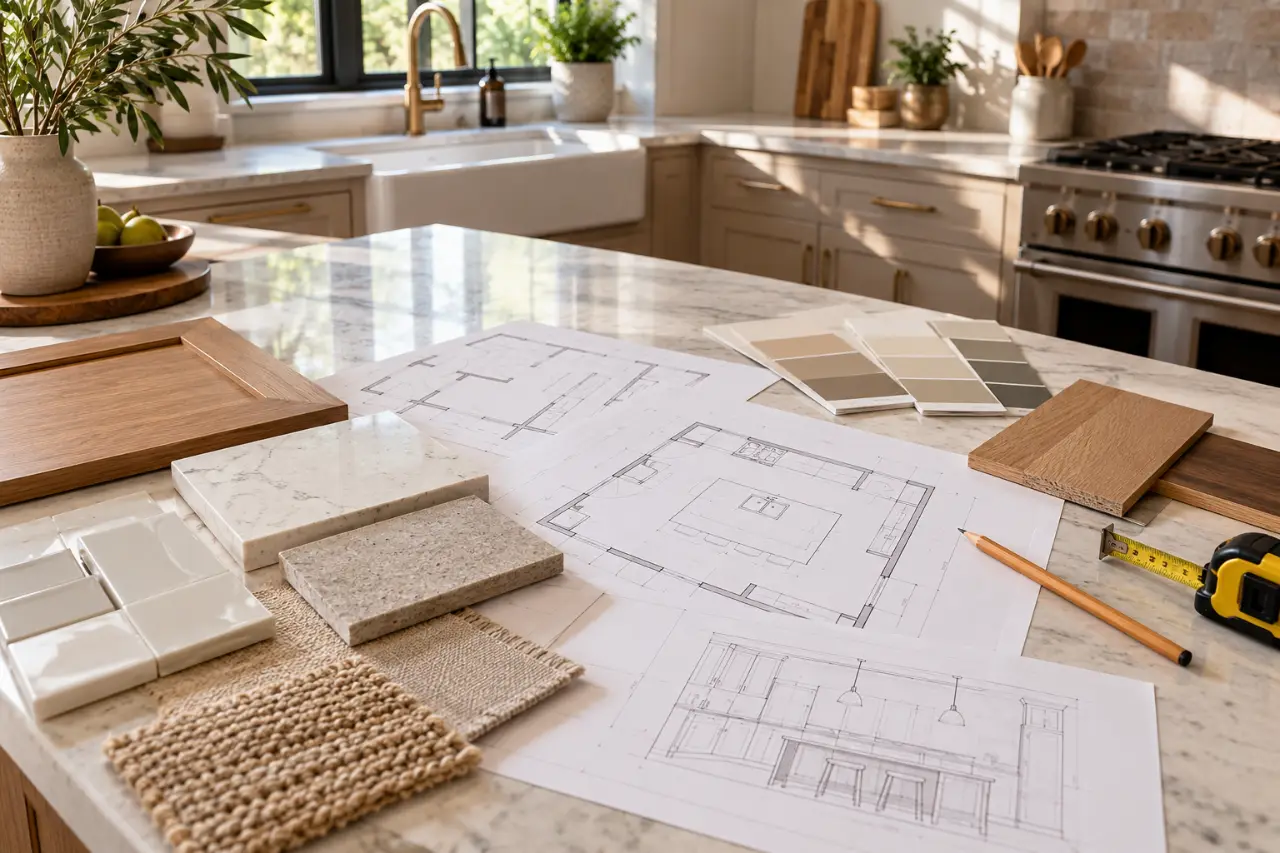 Design concept
5. Choose standard sizes
Windows, doors, bathtubs, shower pans and cabinets all come in standard sizes. Designing around them avoids custom orders, longer waits and more labor to make things fit.
6. Spend where you touch, save where you don’t
Put money into the things you use every day: a good faucet, cabinet hardware, a comfortable counter height, a reliable shower valve. Save on surfaces that are mostly seen, such as using a simple field tile with one feature wall instead of a premium tile everywhere.
7. Plan the work in phases
If you can’t do everything at once, plan the order so later phases don’t undo earlier ones. For example, run electrical or plumbing for a future project while walls or trenches are already open, then finish the room later.
8. Do the right kind of DIY
Painting, simple demolition of non-structural items and cleanup can save labor. Leave electrical, plumbing, gas, structural work and roofing to licensed pros. Older homes can contain lead paint or asbestos, so have materials tested before you sand or tear anything out.
9. Compare bids the right way
California’s Contractors State License Board recommends getting at least three bids and checking references. Give every contractor the same written scope, so the bids are comparable. The lowest number isn’t always the cheapest job if it leaves out demolition, permits or cleanup.
10. Watch the allowances
Many bids include allowances, placeholder amounts for items you haven’t picked yet, like tile or fixtures. A bid with low allowances can look cheaper and end up costing more. Ask what each allowance covers and pick the actual items before you sign when you can.
11. Get the permits
Skipping a permit can look like a saving, but unpermitted work can cause problems later, for example when you sell the house. Ask who will pull the permits and whether the fees are in the price.
12. Check for rebates before you buy
Water agencies in Southern California offer rebates through SoCal Water$mart, including for replacing a lawn and for devices like weather-based irrigation controllers and rotating sprinkler nozzles. Most require you to apply first and buy or build after.
Protect your money when you hire
- Hire only licensed contractors. In California, anyone doing home improvement work worth $500 or more must be licensed. Here’s how to check a license.
- Keep the deposit small. By law, a down payment can’t exceed 10 percent of the project price or $1,000, whichever is less.
- Get it in writing. Don’t sign a contract until you understand the terms.
- Don’t let payments get ahead of the work. Pay as stages are finished, not before.
For more to ask before you sign, see our 10 questions to ask a contractor.
Frequently asked questions
Where do remodel budgets usually go over?
Most often on changes made after work starts, finishes chosen late, and hidden conditions found when walls or floors are opened. Planning early and keeping a cushion for surprises helps with all three.
How many quotes should I get?
The Contractors State License Board recommends at least three, with references, for the same written scope of work.
How much can a contractor ask for up front?
In California, a down payment on a home improvement contract can’t be more than 10 percent of the price or $1,000, whichever is less.
This article is general information for homeowners, not legal or financial advice.
Planning a remodel?
Tell us about your project. We will help you understand your options and connect you with licensed local contractors who may be a good fit.
By submitting, you agree that we may contact you and share your project details with licensed contractors in our network. See our Privacy Policy.