Home / Outdoor living / Fire safety
Zone 0 and Fire-Resistant Homes: What Southern California Homeowners Should Know
The state’s new five-foot rule is not in force yet, but the steps behind it already protect homes and can lower insurance costs. Here is what it means for your yard.
By the American Home editorial team
- “Zone 0” is the first five feet around a home. California adopted rules for it in August 2026, then withdrew them for technical fixes on September 8. They are not in force yet.
- When they return, they would cover State Responsibility Areas and Very High Fire Hazard Severity Zones in cities.
- Existing homes would get three to five years for most changes, starting from the effective date.
- State law already requires 100 feet of defensible space in those areas, and Los Angeles requires up to 200 feet in its Very High zone.
- The same upgrades can qualify for insurance discounts under California’s Safer from Wildfires program.
Where Zone 0 stands right now
On August 19, 2026, the California Board of Forestry and Fire Protection adopted emergency “Zone 0” rules for the first five feet around homes in high-risk areas. On September 8, before the state’s Office of Administrative Law finished its review, the Board withdrew the package to make technical fixes. As of early October 2026, we could find no record that they had been refiled, so they are not in force.
The Board describes the withdrawal as procedural, not a cancellation, so the rules are expected to come back. That makes now a good time to plan, without rushing.
What Zone 0 would require
Zone 0 covers the area within five feet of the house, an attached deck, stairs or pergola, or up to the property line if that is closer. The adopted version would require you to:
- Remove combustible mulch, wood chips, leaves, needles and bark.
- Remove dead or dying branches and plants that let fire climb.
- Keep only limited, well-maintained non-woody plants, within set height, spacing and container limits.
- Disconnect combustible fences and gates from the house. New combustible fencing would not be allowed in the zone.
- Keep sheds under 120 square feet out of the zone unless they are built entirely from noncombustible materials.
- Keep roofs, gutters and the space under decks and stairs clear, and store firewood elsewhere.
Where it would apply, and when
| Area | Covered by the state rule? |
|---|---|
| State Responsibility Areas | Yes, all buildings, whatever the hazard rating |
| Very High Fire Hazard Severity Zones in cities | Yes, occupied buildings |
| High or Moderate zones in cities | Not by the state rule, unless the city adds it |
| Timeline after the rules take effect | What changes for existing homes |
|---|---|
| Day one | Clear roofs and gutters, remove dead branches, keep chimney clearance |
| Within 3 years | Remove combustible material from the first five feet, clear under decks and stairs |
| 3 to 5 years | Plants near walls and windows, fences and gates, small sheds |
New homes would have to meet the rules once the state publishes its updated guidance. No effective date has been set, so none of these clocks have started.
The rules that already apply
- Defensible space. In State Responsibility Areas and Very High Fire Hazard Severity Zones, state law already requires 100 feet of defensible space around buildings: dead plants removed, trees and shrubs spaced and trimmed, roofs and gutters clear.
- Los Angeles brush clearance. In the city’s Very High Fire Hazard Severity Zone, the Los Angeles Fire Department requires clearance up to 200 feet from buildings, grass cut to 3 inches, and at least 5 feet between your roof and overhanging branches.
- Selling a home. Sellers in high or very high fire hazard zones must give buyers documentation that the property meets defensible space law.
Harden the house itself
California’s Safer from Wildfires program lists the home upgrades that make the biggest difference. The state says each one can qualify for an insurance discount, and the California FAIR Plan offers discounts for them too. Ask your insurer how much you would save.
 Design concept
- A Class A fire-rated roof. Most roofs qualify. Wood shake does not.
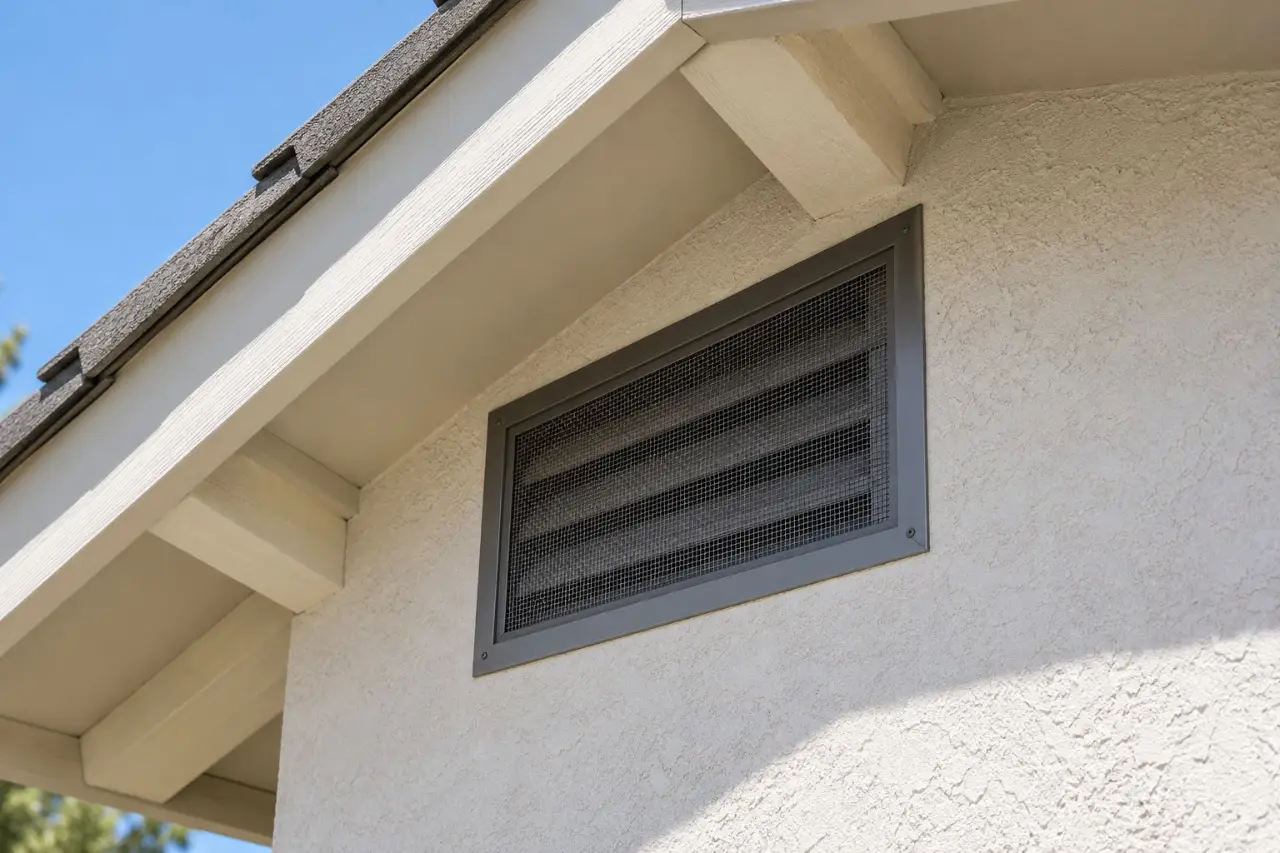
- Ember-resistant vents. Metal mesh screens with openings of 1/16 to 1/8 inch keep embers out of the attic.
- Six inches of noncombustible material at the bottom of exterior walls, measured from the ground and from any deck.
- Enclosed eaves so heat and embers cannot collect underneath.
- Multi-pane windows or shutters, which hold up better in a fire.
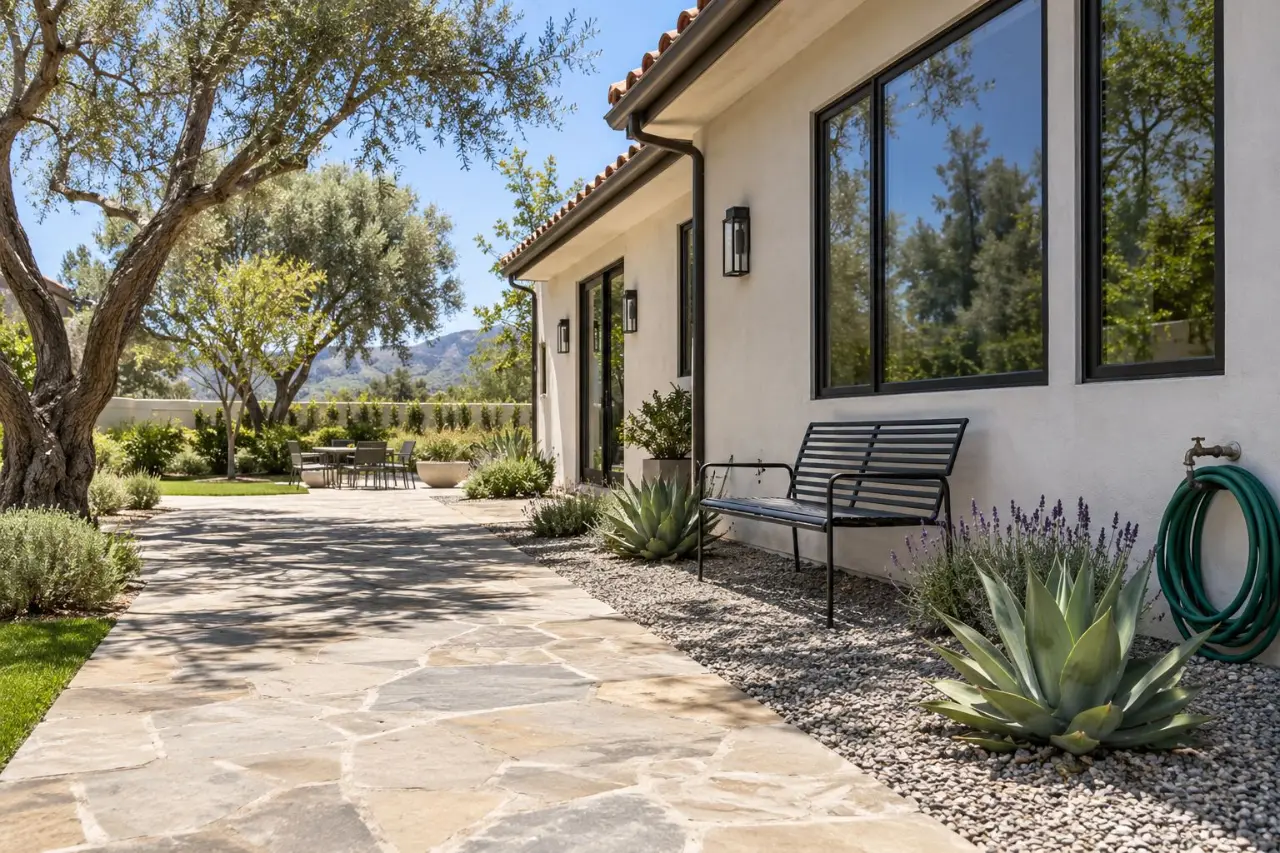
- A five-foot ember-resistant zone with stone or decomposed granite instead of wood chips, and metal instead of wood where a fence meets the house.
What it may cost
The state estimated an average compliance cost of about $960 per homeowner for Zone 0. MySafe:LA, a Los Angeles wildfire safety group, disputes that figure and says costs could exceed $2,500 per property. Replacing a wood fence section, regrading beds or removing large shrubs near the house will cost more.
A weekend checklist
 Design concept
- Clear the roof and gutters.
- Pull mulch and wood chips away from the walls and replace them with gravel or pavers.
- Move firewood, trash bins and wood furniture away from the house.
- Trim branches at least 10 feet from the chimney and 5 feet above the roof.
- Check your attic and foundation vents for fine metal mesh.
- Look at where your fence meets the house. A short metal section or gate there is a common first upgrade.
Planning larger work, like hardscape, a new fence section or replacing a roof? Check the contractor’s license first. Here is how. For patio and cover costs, see our outdoor living cost guide.
Frequently asked questions
Is Zone 0 the law right now?
No. The rules were adopted in August 2026 but withdrawn from state review on September 8. Until they are refiled and approved, they cannot be enforced. Defensible space and local brush clearance rules still apply.
How do I know if my home is in a covered area?
Check CAL FIRE’s Fire Hazard Severity Zone map for your address, or ask your local fire department. If you are in a State Responsibility Area or a Very High zone, the rules would apply to you.
Do I have to remove all plants near the house?
Not under the adopted version. Limited, well-maintained non-woody plants would be allowed within set limits. Woody shrubs, mulch and dead plants would have to go.
This article explains published rules for homeowners and is not legal advice. Rules may change when the state refiles Zone 0. Check with your local fire agency.
Sources
Best Best & Krieger: Board of Forestry adopts emergency Zone 0 regulations (September 2026)
California Defensible Space: Zone 0 rule status (checked September 20, 2026)
Wildfire Los Angeles: Zone 0 regulations withdrawn from OAL review (September 2026)
California Department of Insurance: Safer from Wildfires
California FAIR Plan: new discounts for wildfire mitigation (2023)
CAL FIRE: Defensible space and the law (2024)
Los Angeles Fire Department: Brush clearance requirements
Planning fire-safe outdoor work?
Tell us about your project. We will help you understand your options and connect you with licensed local contractors who may be a good fit.
By submitting, you agree that we may contact you and share your project details with licensed contractors in our network. See our Privacy Policy.